
For most nonprofits, the challenge isn't a lack of information. It's figuring out what to do with all the data they have -- and how to use it to make a bigger difference. That's where entrepreneur Chris Roberts comes in.
Through his Rochester-based company, Data for Humans, Chris helps nonprofits and social impact organizations turn mountains of messy data into insights that can help them make smarter decisions, use their resources more effectively and improve people's lives.
It's work that combines his love of numbers, knack for problem-solving and desire to make a difference.
Chris has been finding creative solutions to problems since childhood. Growing up in Iowa, he spotted an unlikely business opportunity in his elementary school classroom: charging classmates a quarter to fix their broken mechanical pencils.
Today, he's putting that same entrepreneurial spirit and analytical mind to work on much bigger -- and more meaningful -- challenges.
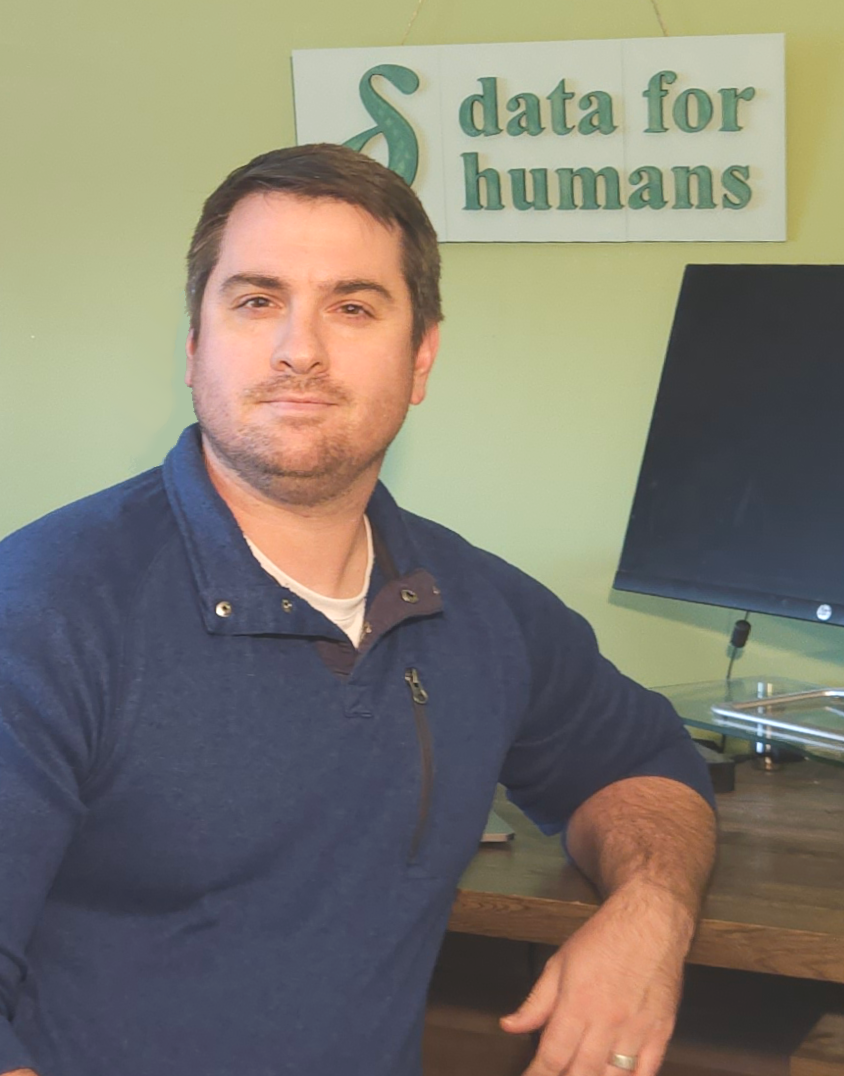
From Chemistry to Community Impact
Chris didn't originally set out to become a data scientist or entrepreneur.
Trained as a chemist, he attended graduate school for chemistry before discovering the power of data analysis during his early corporate career. That experience eventually led him to shift his professional focus toward data science.
But another interest had been part of his life for years: volunteering.
Chris frequently used his technical skills to help nonprofits and causes he cared about. Those experiences showed him just how much organizations could accomplish when they had access to better information.
One memorable project involved helping an organization assess the potential effects of federal funding cuts on nonprofits across a state. By analyzing available funding data, Chris and his colleagues could estimate how reductions might affect individual programs, giving organizations advance warning and an opportunity to prepare.
The experience reinforced something Chris had been thinking about for years: What if more nonprofits had access to that level of data expertise?
"I wanted to make that level of data maturity available to other nonprofits and social impact organizations," he says.
In late 2021, he launched Data for Humans.
Turning Data Into Action
Starting a business during the COVID-19 pandemic wasn't easy.
Chris was living outside Rochester at the time and largely figuring things out on his own. He built a website and began reaching out to organizations where he'd previously volunteered, asking what they could accomplish with more time, resources and analytical support.
Initially, his work was driven by individual client needs. But as he took on more projects, he began seeing opportunities to help coalitions and advocacy organizations that work across multiple agencies or communities.
One example is Data for Humans' work with the Any Path Home Coalition, a group of homelessness response service providers in Rochester and Olmsted County.
Coalition members share data to better coordinate their efforts and connect people experiencing homelessness with available resources.
Data for Humans developed a dashboard that tracks monthly trends in the number of single adults experiencing homelessness in the Rochester area.
The goal is to make that information more transparent and accessible to the community while helping service providers understand the scope of the problem and whether conditions are improving.
But Chris believes that's only the beginning.
The next step is using data to better understand the barriers people face in obtaining housing and identifying where resources could make the greatest difference.
For Chris, projects like this illustrate why he started Data for Humans in the first place. They also reflect his desire to align his professional work with his personal values.
Growing Together
A major turning point for Data for Humans came with the addition of Michael Soto, PhD, as chief strategy officer in 2026.
Chris and Michael had worked together previously, and their partnership has brought new energy and momentum to the business.
With Michael helping develop the company's strategy and growth opportunities, Chris has found something many solo entrepreneurs lack: a trusted partner to share ideas, navigate challenges and celebrate successes.
"Having someone to bounce ideas off of, to partner with, makes the entrepreneurship growth so much easier," he says. "Having a partner you trust is an amazing benefit if you can find it."
The business has also started to extend beyond spreadsheets and dashboards, Chris says. Through its data-driven fabrication arm, Relayered Design, Data for Humans builds 3D-printed scale models for clients, and Chris is exploring how tactile maps could help people with low vision navigate public spaces. He’s eager to hear from anyone working in that area.
Finding Community Through Collider
Chris' entrepreneurial journey has also been shaped by his connection to Collider.
After living in the Twin Cities, he moved to Byron to be closer to family. While looking for a coworking space, he discovered Collider and was intrigued by its emphasis on entrepreneurship.
He participated in Collider's CO.STARTERS Bootcamp program and later became a regular coworking member.
Both experiences proved valuable.
CO.STARTERS helped Chris strengthen his financial understanding and think more strategically about aligning his business model with his financial goals.
Coworking provided a productive place to work, but the relationships he developed through Collider have been just as important.
One particularly meaningful connection was with leadership coach Grace Pesch. Chris learned about Grace, who runs consulting firm Futures From Within, through a Collider entrepreneur profile. This eventually led to a coaching relationship that has helped him develop his leadership skills.
That growth is especially relevant as Chris transitions from doing much of the technical work himself toward taking on more leadership responsibilities.
He describes the coaching as transformative -- and an example of what he values most about Collider.
"Really the ecosystem around Collider is a huge part of what makes it special," he says. "It's not just the services or the people in isolation. It's all together."
Find Your People
As Data for Humans continues to grow, Chris is learning that building a successful business takes more than technical expertise. It also requires financial knowledge, leadership skills and people you can count on.
His advice to other entrepreneurs reflects that experience.
"Find your people," he says. "Really find your supporters that you connect with, people you can rely on to bounce ideas off of and share the ups and downs of entrepreneurship with."
It's a lesson that connects both sides of Chris' work: Whether you're building a business or tackling a complex community challenge, the right people -- working with the right information -- can make all the difference.
To learn more about Data for Humans, visit data-for-humans.com.
Chris is hosting a Nonprofit AI Policy Session on December 15 for members of the Rochester Nonprofit Consortium. Learn more.
