
Two Accidental Entrepreneurs, One Powerful Connection: Finding Common Ground in Science and Startups
Neither Dr. Allisa Song nor Emma Jacquin ever planned to become an entrepreneur.
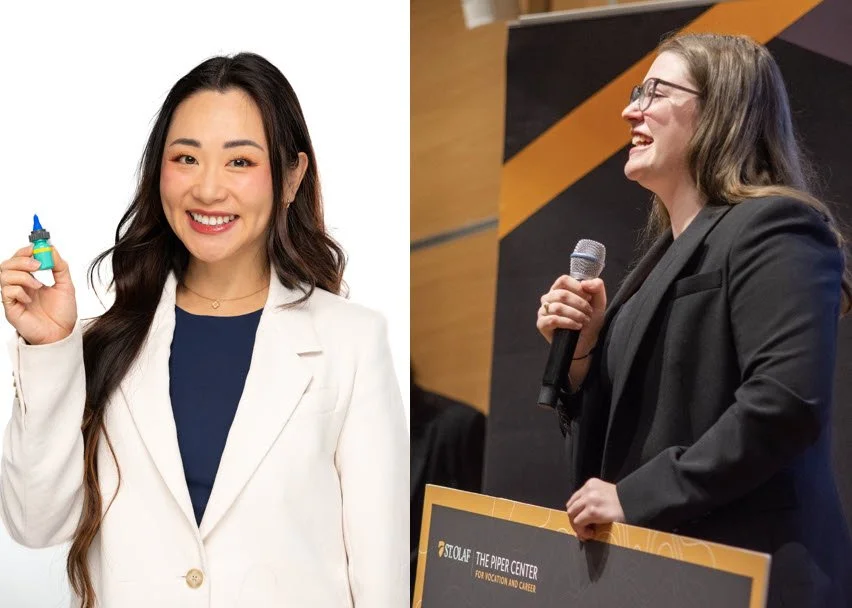
Both were drawn to medicine by a desire to help people. Both stumbled upon a healthcare problem they believed they could solve. And both found themselves learning how to build a business along the way.
Now, thanks to a connection made through Collider, the two women are learning from each other.
Song, a Rochester-based physician and founder of Mu Medical, has spent years turning an idea for improving eye care into a growing medical technology company. Jacquin, a sophomore at St. Olaf College, is just beginning her entrepreneurial journey with a medical device designed to help people experiencing a frightening breathing condition.
Their products are different, and they're at very different stages of building their companies. But they have plenty in common, including an unexpected path into entrepreneurship and a belief that innovation should make people's lives better.
And that's exactly why Collider brought them together.
Dr. Allisa Song: From a News Article to a Medical Device Company
Song's entrepreneurial journey began with an investigative news article.
While applying to medical schools, she came across a ProPublica story about the surprisingly large size of prescription eye drops and the financial burden that wasted medication was placing on patients with glaucoma.
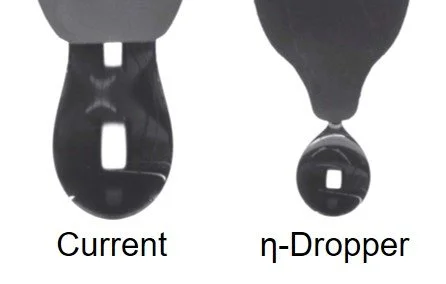
The problem was straightforward: Conventional eye drops deliver more medication than the eye can absorb. The excess runs down patients' faces, wasting medication they've paid for. For people who rely on expensive prescription drops, that waste can add up, sometimes leaving them without enough medication before insurance will cover a refill.

Song, who had studied biology, psychology and neuroscience at the University of Washington, couldn't believe such a seemingly solvable problem still existed.
"I read that article and thought, well, I have six or seven months until medical school starts. This seems like an absurd problem to even exist. Why not just make the drops smaller?" Song recalls. "Of course, I had no idea what it took to commercialize a medical device. I think that naivete actually helped me jump into it."
What started as a thought experiment soon became a business.
Song teamed up with co-founders who shared her interest in solving the problem. None had a business background, but they entered more than 20 student entrepreneurship competitions, using their winnings to fund early product development.
Meanwhile, Song began medical school at Mayo Clinic in Rochester, juggling the demands of her education with building a company.
The result was Nanodropper, a small adaptor that attaches to eye drop bottles to deliver smaller, more precise drops, reducing unnecessary waste.
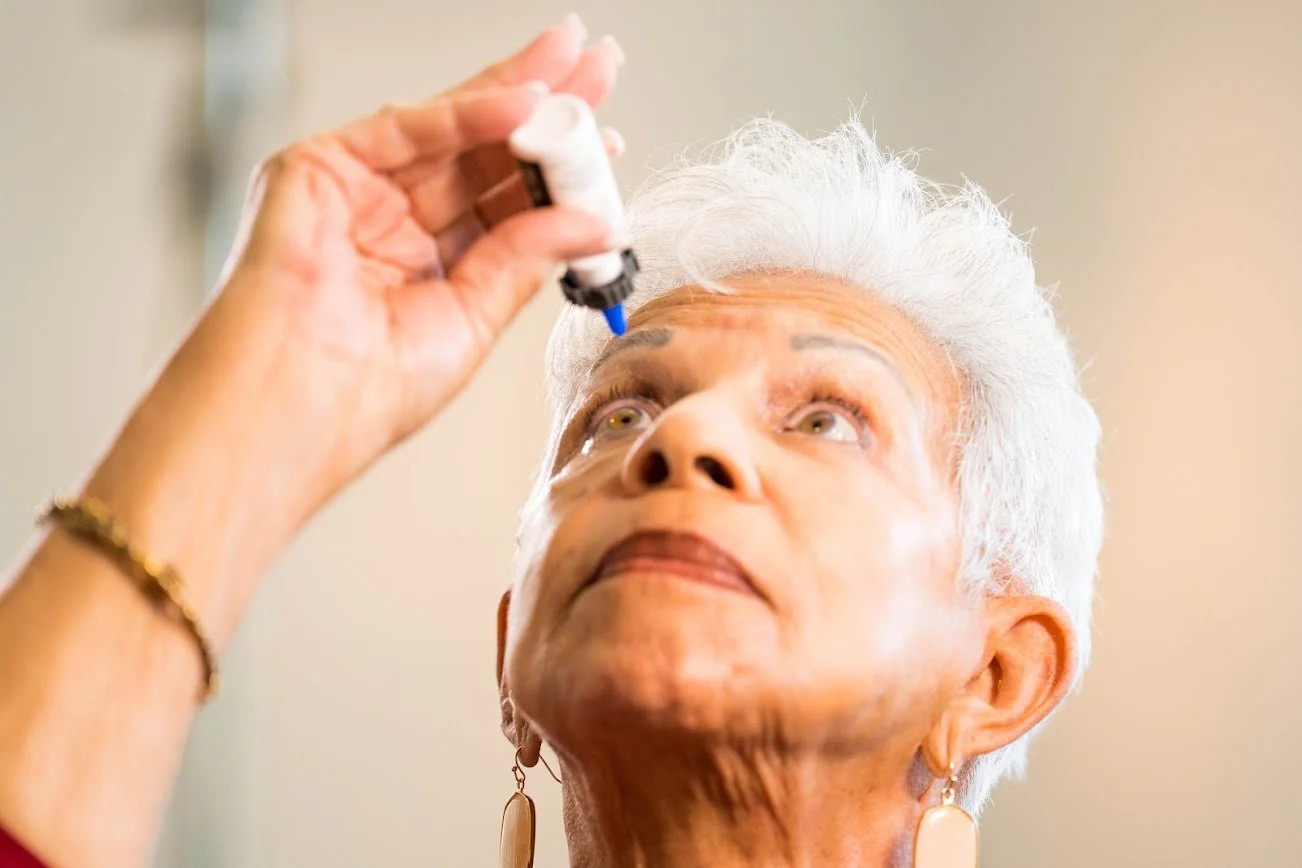
The company launched its product in 2020 and has continued growing. Today, its eye drop devices are available directly to consumers and through distributors, clinics and hospitals, with products reaching approximately 3,000 eye care clinics and hospitals, including Veterans Affairs facilities.
Along the way, the company evolved from Nanodropper into Mu Medical, reflecting a broader mission to develop innovative technologies that improve eye care. Its work now extends beyond eye drop delivery into other medical technologies, including diagnostic tools and artificial intelligence applications.
Despite the company's growth, Song remains focused on the patients who inspired her original idea. She particularly values the handwritten letters and personal stories the company receives from people whose lives have been improved by its products.
Her goal was never simply to start a company. It was to solve a problem that mattered.
Emma Jacquin: A Classroom Project With Real-World Potential
Like Song, Jacquin didn't set out to launch a business.
The Colorado native came to St. Olaf College with a lifelong fascination with medicine. She remembers being just four years old, sitting in her grandfather's chair reading one of his medical textbooks. Her grandfather was a surgeon, and his profession helped spark an early interest in the human body.
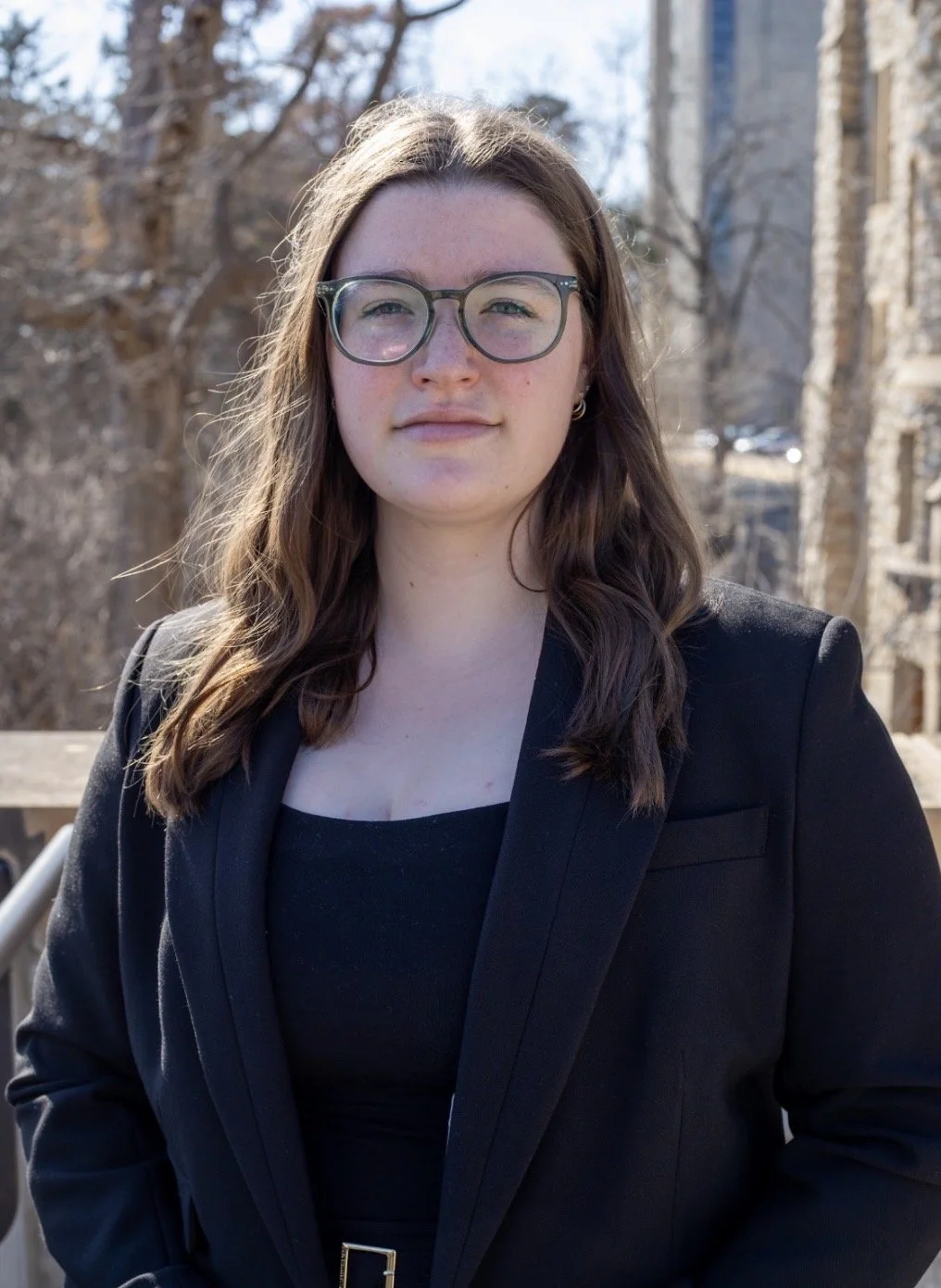
Jacquin has always envisioned a career in medicine. Entrepreneurship wasn't part of that picture.
That changed during her freshman year.
As part of a January-term course called Technology, Health, and Wellness, Jacquin and three classmates were challenged to identify a healthcare problem and develop an innovative medical device to address it.
One of her teammates had vocal cord dysfunction (VCD), a condition that can cause the vocal cords to close unexpectedly, making it difficult to breathe. Often mistaken for asthma, VCD can be especially frightening during exercise or other physical activities.
The classmate shared her frustration with the limited options available to help manage the condition. That personal experience inspired the team to explore a solution.
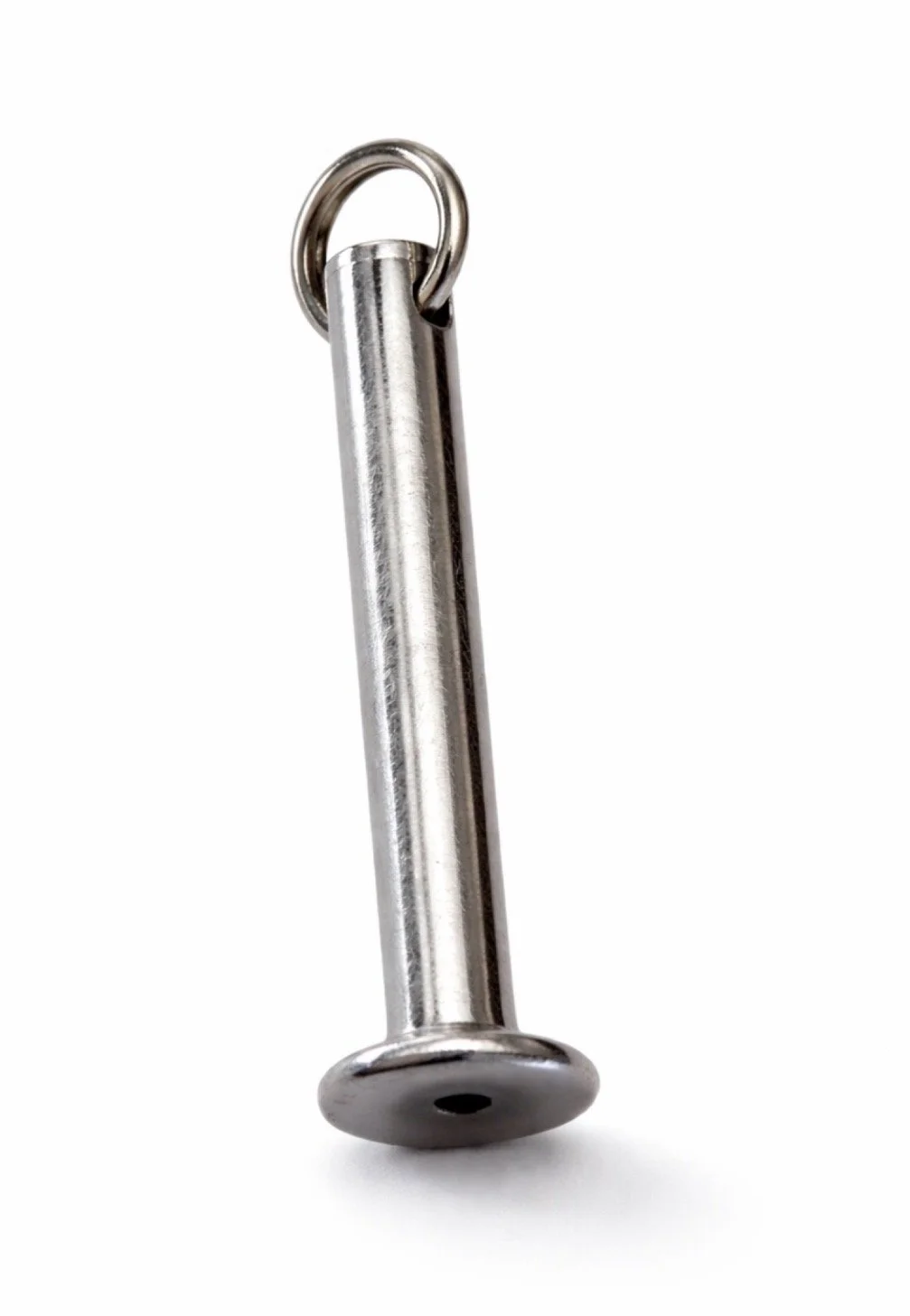
Their idea became VCD-Zero, a small wearable device designed to help people manage breathing episodes without medication. The device uses a simple airflow mechanism that allows users to perform a breathing technique intended to help stabilize their airway.
"At its core, VCD-Zero is not just a device; it's a way to give people control back in moments where they feel they're losing it, and in a moment someone can't breathe, nothing else matters," Jacquin said.
What began as a classroom assignment quickly gained momentum. With guidance from their professor and other experts, the students developed prototypes and began exploring whether the device could work with actual patients.
Jacquin and a fellow student continued pursuing the concept, with Jacquin taking the lead on the business side while research and product development progressed.
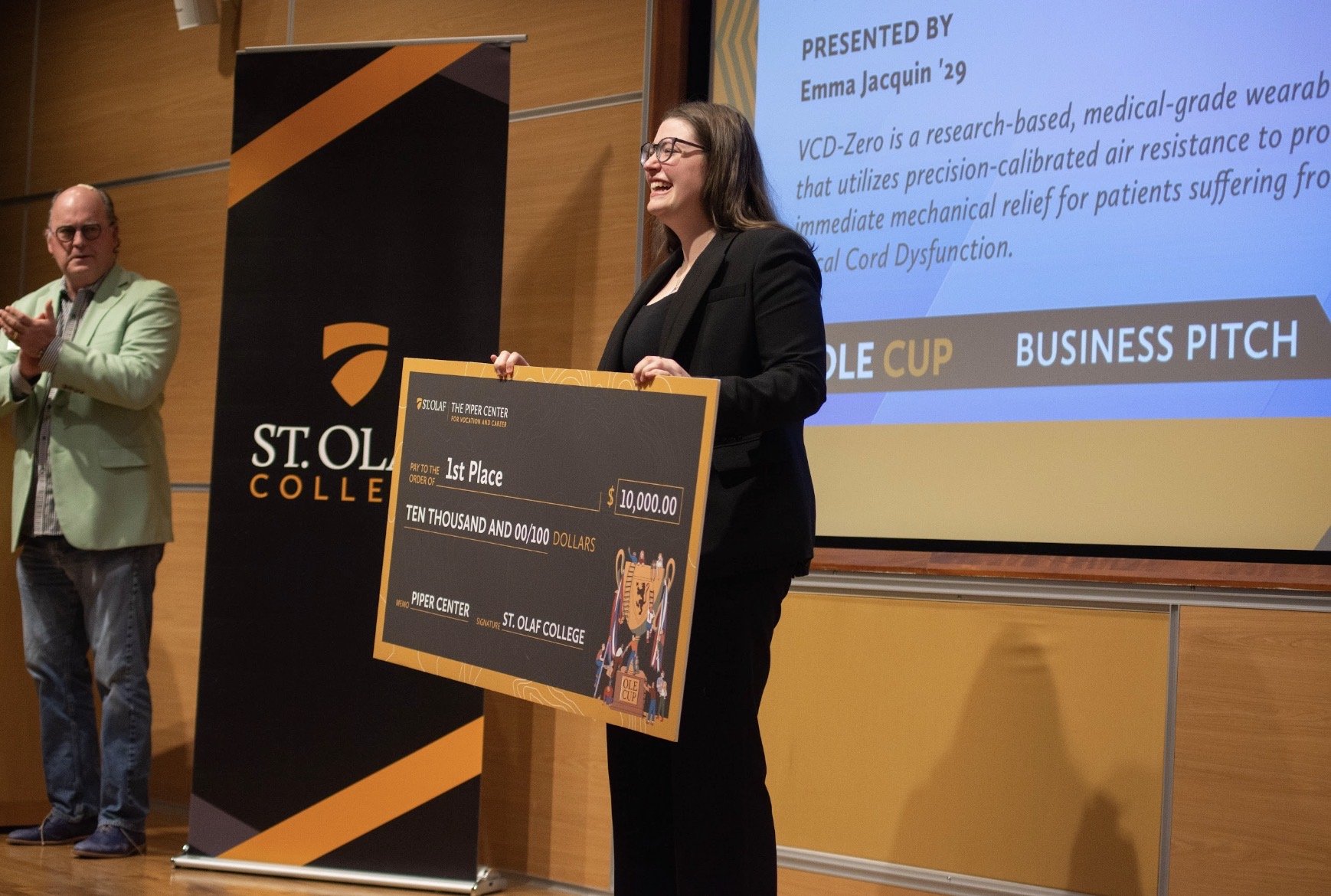
There was just one problem: Jacquin had never taken a business class. Nevertheless, she entered St. Olaf's Ole Cup entrepreneurship competition in April 2026, pitching VCD-Zero against 10 other student ventures.
She won first place and $10,000 in funding. The venture also became a semifinalist in the Minnesota Cup competition.
Today, Jacquin is continuing to develop the product while pursuing her undergraduate education. Additional patient testing is planned for 2027, and she recognizes that bringing a medical device to market requires extensive research, testing and regulatory approvals.
Although she never expected to enjoy entrepreneurship, the experience has changed her perspective. She now hopes not only to bring VCD-Zero to market someday but also to continue developing other innovations that improve people's lives.
Making Connections That Matter
When Collider connected Song and Jacquin, it brought together two women who understand the unusual challenges of building medical technology companies while pursuing demanding educational paths.
For Jacquin, the opportunity to learn from someone who has already navigated many of those challenges is invaluable.
Song built her company while attending medical school, an experience Jacquin can envision for herself someday. She also understands the complexities of developing healthcare products, finding funding, building relationships and establishing credibility in an industry where women remain underrepresented in leadership.
Jacquin is especially interested in learning from Song's experiences as a woman in a male-dominated field, avoiding common startup mistakes and meeting people who can help her advance her idea.
As a sophomore, she knows she has much to learn. Having someone who understands both the science and the business side of medical innovation gives her a valuable resource as she considers her next steps.
For Song, mentoring an emerging entrepreneur is an opportunity to return the support she received while building her own company.
She credits mentors with helping her learn the business world, make important decisions and avoid mistakes. Even today, she regularly turns to other women CEOs whose companies are further along for advice and perspective.
"Startup founders know they wouldn't be where they are without mentors who believed in them and taught them what they know," Song says. "The understanding is that you pay it forward by always saying yes to meetings with founders or students who are in the earlier stages. That's the only way it works."
It's a philosophy that aligns closely with Collider's mission to help entrepreneurs succeed through connections, resources and community.
And it demonstrates that entrepreneurial support isn't always about funding, office space or formal programming. Sometimes, it's about introducing two people who might never have crossed paths otherwise.
For Jacquin, the connection is especially valuable because Song has already navigated many of the challenges she expects to face herself.
"Even though our products are very different, the path to get there is very similar," Jacquin says. "As a woman in a male-dominated field, it's important to learn from someone who has faced challenges I may face in the future. I'm a sophomore in college, and I have a lot to learn. I really appreciate people who are willing to give me advice, who believe in my idea and who can connect me with others who can help."
One entrepreneur has already traveled a long way down the road. The other is just beginning.
Neither expected to become an entrepreneur. But through their connection, they're helping build something bigger than their individual companies: a community where entrepreneurs learn from one another, share what they've discovered and make the path a little easier for whoever comes next.
