
Custom Sewing, Alterations, and Vintage Fashion with Brooke Burch
Collider is passionate about sharing the stories of Rochester entrepreneurs and small business owners! We recently had the pleasure of meeting with Brooke Burch of Brooke Burch Custom Sewing & Alterations and Vintage Rack.
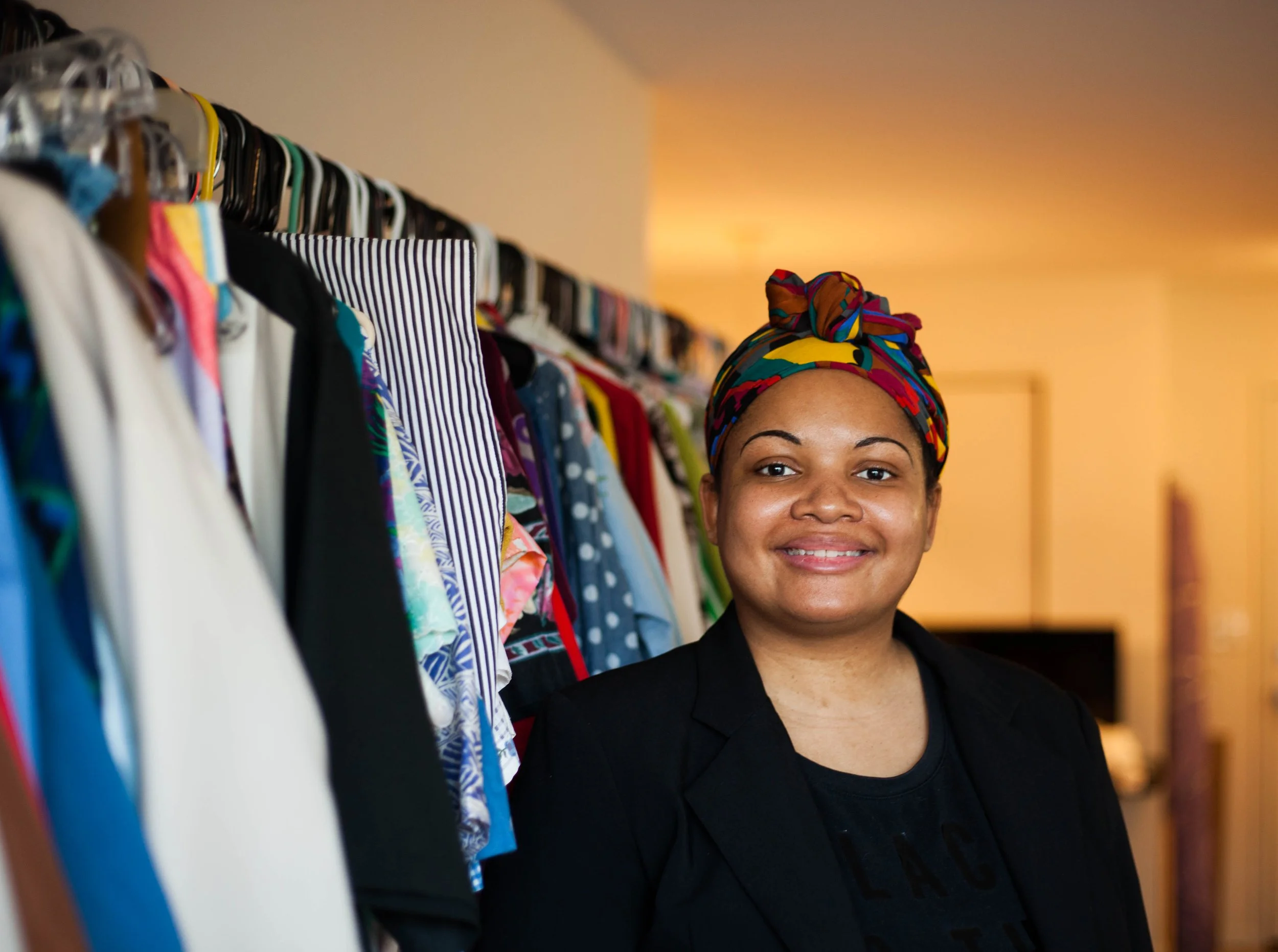
Photo by Corrie Strommen
Brooke Burch, who runs a custom sewing and alterations business and sells vintage clothing out of her studio, attributes a longtime love of sewing and creativity to her grandmother, who she moved to Rochester to live with at an early age.
“I wouldn’t say that I was a hyper child, so much as inquisitive. To occupy that, my grandmother gave me all kinds of crafts to do. I was always playing with glue and yarn. I don’t know how, but at some point I got a hold of a needle and thread and took an interest in sewing. I would cut things up and tie and sew them back together. Eventually she must’ve gotten tired of me doing that because she got me a sewing machine and taught me the basics. So I grew up just experimenting with sewing.”
Although she loved sewing and designing, when she pursued further education at University of Wisconsin-Stout she was contemplating a degree in biology. But, a year into her studies when she declared her major, her childhood passion won out and she pursued Apparel Design and Manufacturing.
Brooke always had interest in traveling and exploring, so when the opportunities arose during college to be an apprentice in New York and study abroad in London, she jumped at both chances.
While in New York interning with a designer working out of his apartment, Brooke noted, “It opened my eyes to how difficult it is to maintain a business, especially in a big city. After all kinds of running around New York for supplies, I appreciated Rochester more.”
On her time in London she stated, “It was life changing. London is such a fashion town. I took the time to explore uncommon areas, meet new people, take photos, and people watch. I talked to people about what they were wearing and why they were wearing it. I think that’s what initially piqued my interest in styling, which isn’t at all what I learned in school. I learned how to create an ensemble or a collection and design patterns, but I didn’t really learn anything about trends in fashion and what people like to wear.”
After graduating, Brooke naturally gravitated back to Rochester to be close to family. But she already had plans as to what to do next, and wanted to do so from a place of safety in a familiar place.
“I always knew that I wanted to start my own business. I wanted to be the boss and not work for anyone else. I had an idea of how a business should be run and wanted to be able to do that myself, to make people happy and treat people fairly. Rochester was my bubble growing up, I felt comfortable there. I’m very cautious about making big moves. I always want to make sure that the moves I’m making are the right ones. So it’s been a slow build, but I’m building my business the way that I want.”
In 2015, shortly after having her son, Brooke, who had been working and teaching private sewing lessons out of an apartment she shared with her grandmother, found the need to expand.
“It was so tight in there with the baby. I didn’t have anywhere to sell my clothing. I was putting my sewing machine on the kitchen table to work. It was just crazy. So I got my own apartment to spread out. When I moved in I didn’t have anything. I had a table, a sewing machine, and a baby-that’s it. So I built it from the ground up and it was really, really hard for a while. I was working part time jobs while building this business, which I eventually had to quit. It was a really rough year, making all of those transitions, figuring out how to do this full time. I had to think on my toes, come up with innovative ideas, and work with a lot of people to make it happen.”
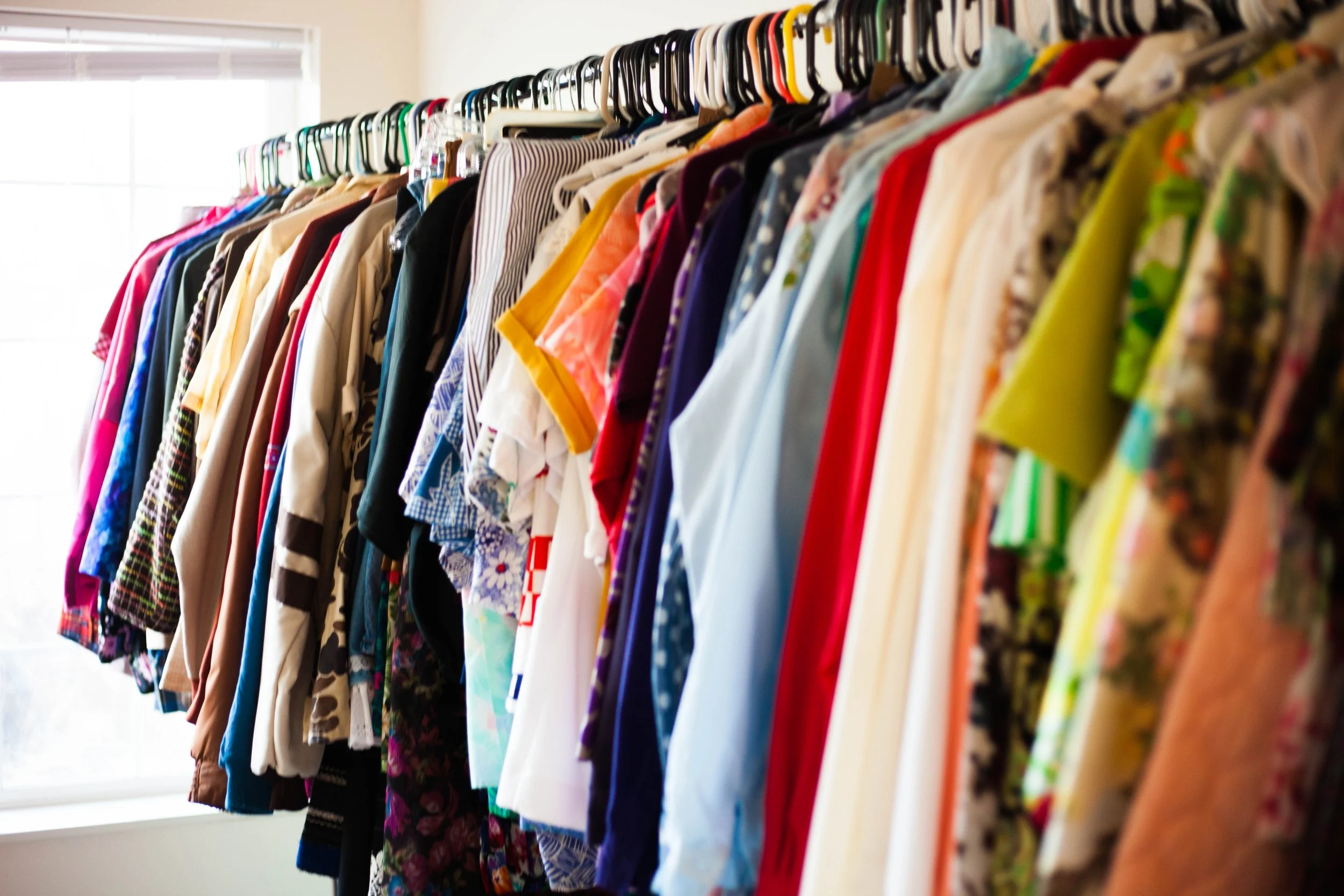
Photo by Corrie Strommen
Fast forward to now and Brooke is busy with twenty sewing students, alteration and design clients, and Vintage Rack, a large collection of vintage pieces she sells out of her studio.
“I’ve always loved vintage, but I think I started becoming curious about it when I took a fashion history class in college. Then I started collecting sweaters. I had a sweater addiction. I loved all the wild 80’s prints. Shortly after I graduated I realized that I had to stop getting so many sweaters because I had nowhere to put them. That’s when I started thinking about selling them. So over time I curated a collection of sweaters and other vintage clothing which just lived in my studio for two years. Eventually clients started looking through the collection and buying things. So I started making the collection bigger, going to garage sales and making connections with people. Now I have a lot of stuff.”
When the pandemic hit and Brooke didn’t have people coming into her studio to shop, she improvised by having a large outdoor sale, which only sparked more interest and awareness of her vintage collection. And though the pandemic presented its challenges, it also provided a huge opportunity through mask making.
“The pandemic was certainly challenging, I definitely needed to do a lot of things differently. But I also made over five thousand masks and was able to bring in money that way.”
Though she’s faced many challenges along the way, Brooke has learned to roll with the punches. She’s hired a business coach to help her learn what she needs to create a successful business.
“I had to figure out that I couldn't do everything on my own. I had to reach out to different people for different things. Whether that’s for help with my website, asking for business advice, or hiring on people to help with embroidery. I had to pull in people to get this thing off the ground.”
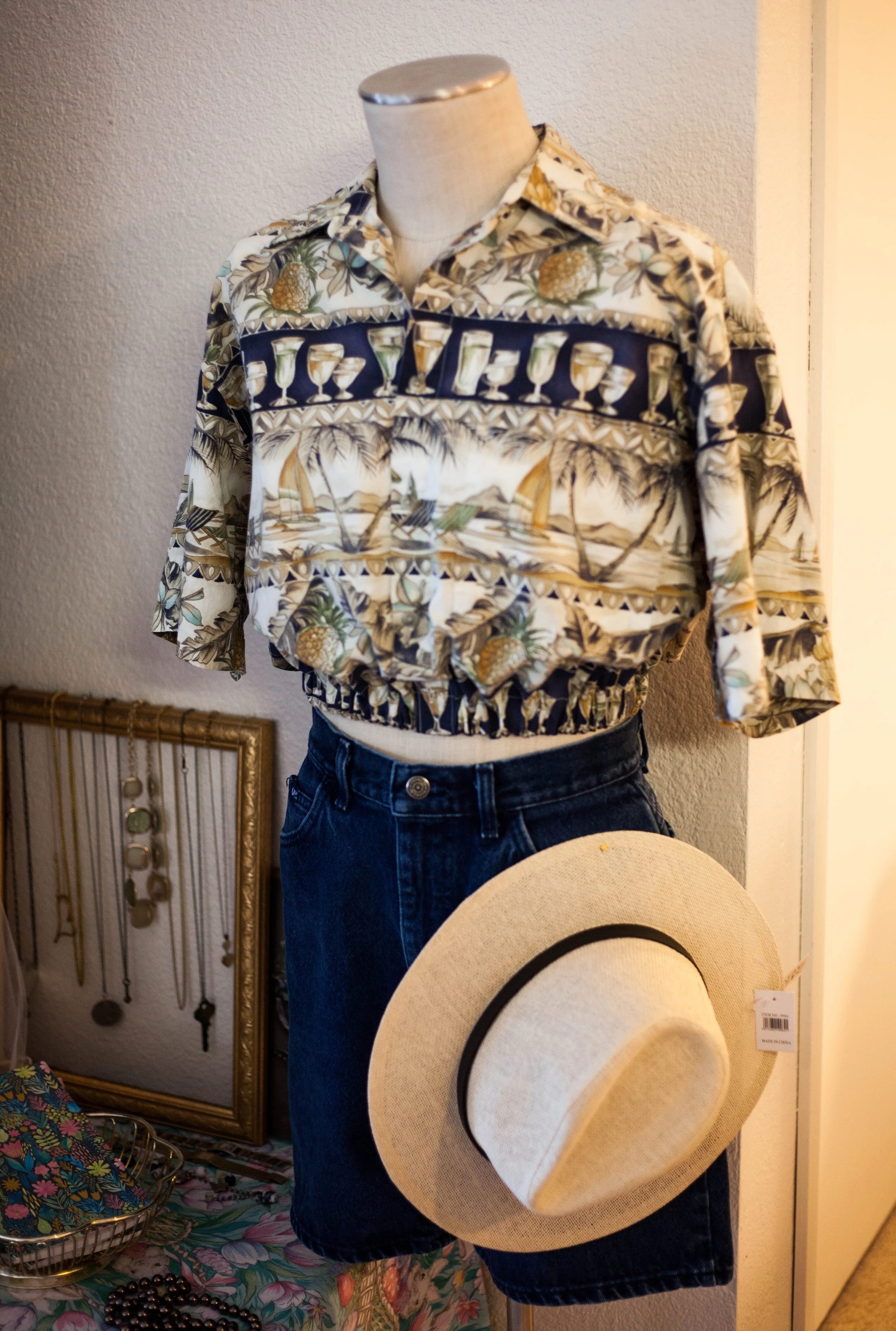
Photo by Corrie Strommen
Brooke hopes to expand to her own brick and mortar in the future, creating a curated boutique and studio outside of her home. Though some people have encouraged her to leave Rochester to pursue her expansion, Brooke sees opportunity here.
“This is a really good time to open business in Rochester; there isn’t a lot of competition here yet. You can become a pioneer in whatever field you want. I’ve never thought that you had to leave where you’re from to do whatever you love. I recently read an article that highlighted designers all over the United States, in all of these tiny little towns. These designers are making it happen in all kinds of places that you wouldn't expect. It is possible, you just have to dream big. Maybe I’ll open my first studio and Vintage Rack here and expand to another city in the future.”
She advises aspiring entrepreneurs to take initiative to pursue education, whether that be through a college degree or YouTube videos.
“As with most things, you need to be educated. I wouldn’t say that you need a degree, but you can pursue learning in many different ways whether it be YouTube videos, picking up a book at the library and asking some questions, or just using the internet to your advantage.”
Outside of work, Brooke loves walking and going on little adventures for artisanal coffee. Local spots she loves are Fiddlehead Coffee, Old Abe’s, and Cafe Steam. Brooke is also happy that she finds so much fulfillment in her work.
“Sewing is so therapeutic for me and I’m really lucky to have a job that affects me in that way.”
Thank you so much for taking the time to read Brooke’s story! If you find value in this content, please consider donating to help Collider continue amplifying the voices of Rochester entrepreneurs. You can also learn more about Brooke Burch Custom Sewing & Alterations and Vintage Rack by clicking the link below!
Brooke Burch Custom Sewing & Alterations and Vintage Rack
Article by Corrie Strommen, Director of Community at Collider.
"A Labor of Love" Kat Helms of Pretty Good Cookies Shares Her Cookie Love with the Rochester Community
Collider is passionate about sharing the stories of Rochester entrepreneurs and small business owners. We had the recent pleasure of meeting with Kat Helms, a recent addition to the Rochester community, who works at Mayo Clinic as an Occupational Therapist and founded Pretty Good Cookies as a small side business and passion project upon moving to Rochester!
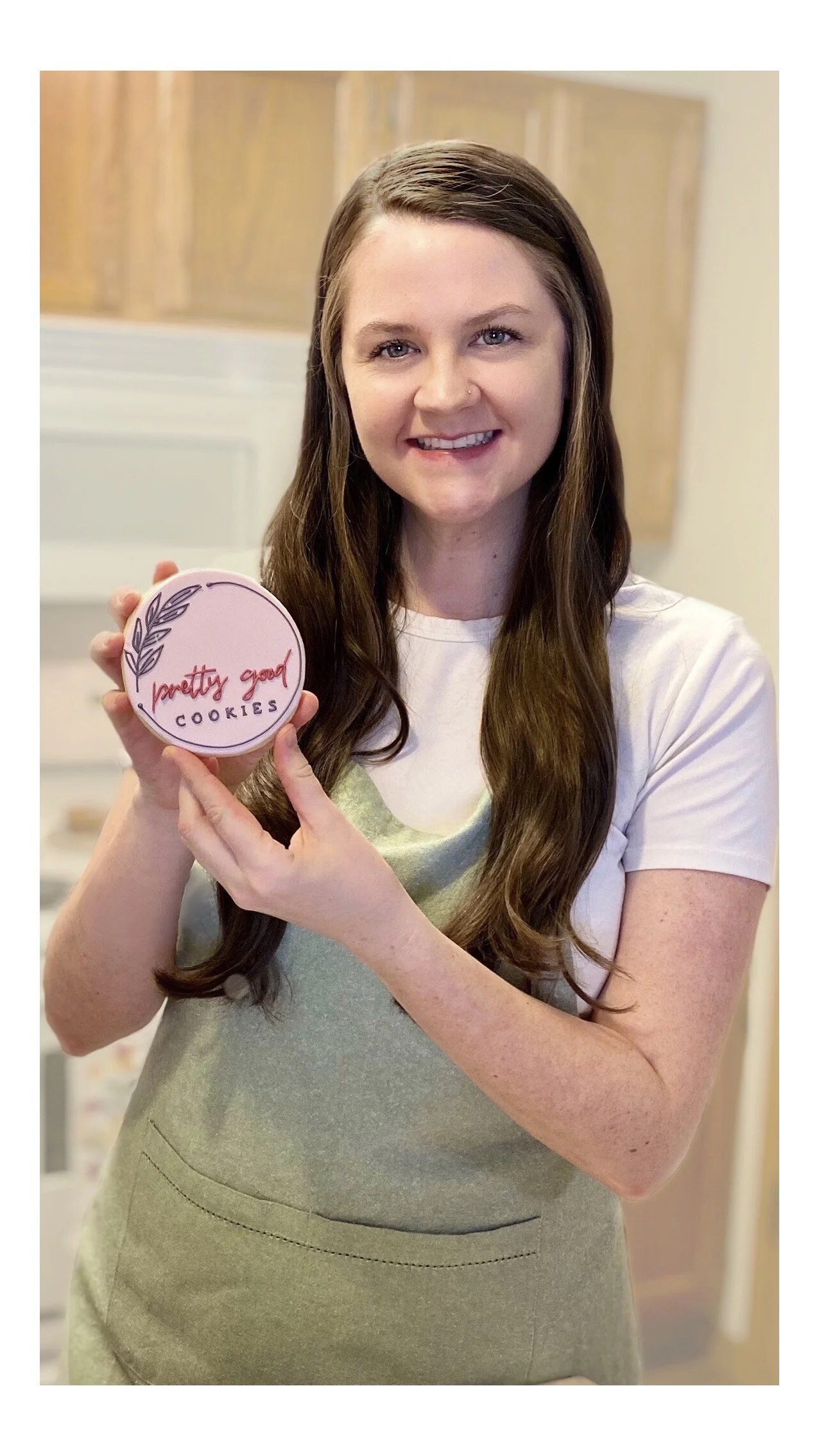
Contributed photo by Kat Helms
Kat attributes her childhood love of baking with her sisters to her current cookie passion. Throughout childhood, high school, and college Kat has fond memories of baking with family and friends. While in grad school, off for a month over the holidays, she found herself bored and looking for something to fill her time. She turned to her trusty hobby, this time paying special attention to decorating the cookies she had made. The results were much better than anything she had done before.
In February of 2020, Kat moved to Rochester to start her position as an Occupational Therapist at Mayo Clinic. She immediately found herself thrown into a whole new pandemic world in a whole new city.
“I didn’t have a couch, a TV, not even a kitchen table. I had nothing to do, with the pandemic there just wasn’t anything going on. To fill my time I started learning more about the cookie decorating process.The baking part is very methodical and calming, I don’t have to think about it much. With decorating I get into my own flow and it’s very fun and therapeutic for me.”

Photo by Corrie Strommen
“I would bring the cookies I made into work, which was really fun at the time. Morale was low at the hospital and it was such an anxious, uncertain time. My coworkers loved them. They would tell me ‘ You should sell these!’ ‘These cookies are too pretty to eat!’, and eat them and tell me how good they were.”
While considering starting a cookie business out of her home, Kat’s biggest concern was safety.
“I was asking myself if this idea was safe and smart. We were dealing with a respiratory virus that we just didn’t know a lot about at the time, and working in the hospital I was around it all the time. So I definitely had concerns about being an unintentional carrier and spreading it to customers. There was also the added issue with supply chains. Initially I was getting everything online. There were times that orders were taking weeks to arrive with time sensitive supplies, or while I was trying to fill an order. Recently a lot of items have been on backorder or not available which can be really stressful. I’ve had to get creative with the supplies that I’m using.”
On the flip side, Kat explained, “For the most part, I think starting a cookie business during the pandemic had a silver lining. Having all of that extra time during the pandemic really allowed me to practice so many techniques and really understand the medium of cookie decor.”
Kat also found that with more people spending time at home and not out and about that they were much more likely to spend money on a cookie decorating kit, spending family time together, and doing something creative and special.

Contributed photo by Kat Helms
Still very new to Rochester while starting Pretty Good Cookies, Kat, who was inspired by her coworkers to start her business, also found them to be integral in spreading the word about her cookies.
“I think the only reason I have the customer base I have now is because of my coworkers. They became my immediate community. They really jump-started my customer base and made it possible to get this project off the ground.”
They’ve gone so far as to say that Kat should make her cookies a full time job, but she has her reservations.
“To be frank, I don’t know if I would ever consider opening a brick and mortar here. Based on what I’ve seen of other bakeries and restaurants and the amount of turnover just over the couple of years that I’ve been here, it seems like a difficult scene to be successful in. I would also have to make so many cookies to compete with my day job salary. The cookie decorating process is truly a labor of love. Just to make a living wage I would have to charge around two hundred dollars a dozen, which just isn’t reasonable.”
She continued, “That said, I could see myself doing it half of the time. I really love what I do as an Occupational Therapist, and I think I’m really good at it. It’s a perfect profession for the medical side of my brain. But my creative side also wants to do more with cookies. So I think an equal blend of the two would be ideal in the future. I feel really lucky that I’ve found two things that I not only really enjoy doing, but am also really good at. Both were a learning process, but also in a way fell into my lap. I feel very fortunate that I have this problem of being pulled between two things that I love.”
Outside of working a full time job and running Pretty Good Cookies, Kat pursues all kinds of art projects.
“I’m a crafty, crafty gal.” Kat said. “I’ve done anything from making jewelry, quilting and glassblowing to painting, drawing and photography. Almost any artsy project I try I’m good at and really enjoy.”
She continued, “I also really love being outdoors. I love hiking; I love camping. I just like getting lost in nature and exploring new things.”
She also loves spending time with friends and trying out restaurants around town. Some of her favorite spots include Forager, Bitter and Pour, and Thai Pop.
“I love doing, learning, and exploring. I feel like I never left that childhood stage. I feel like a sponge; I just want to do it all!”
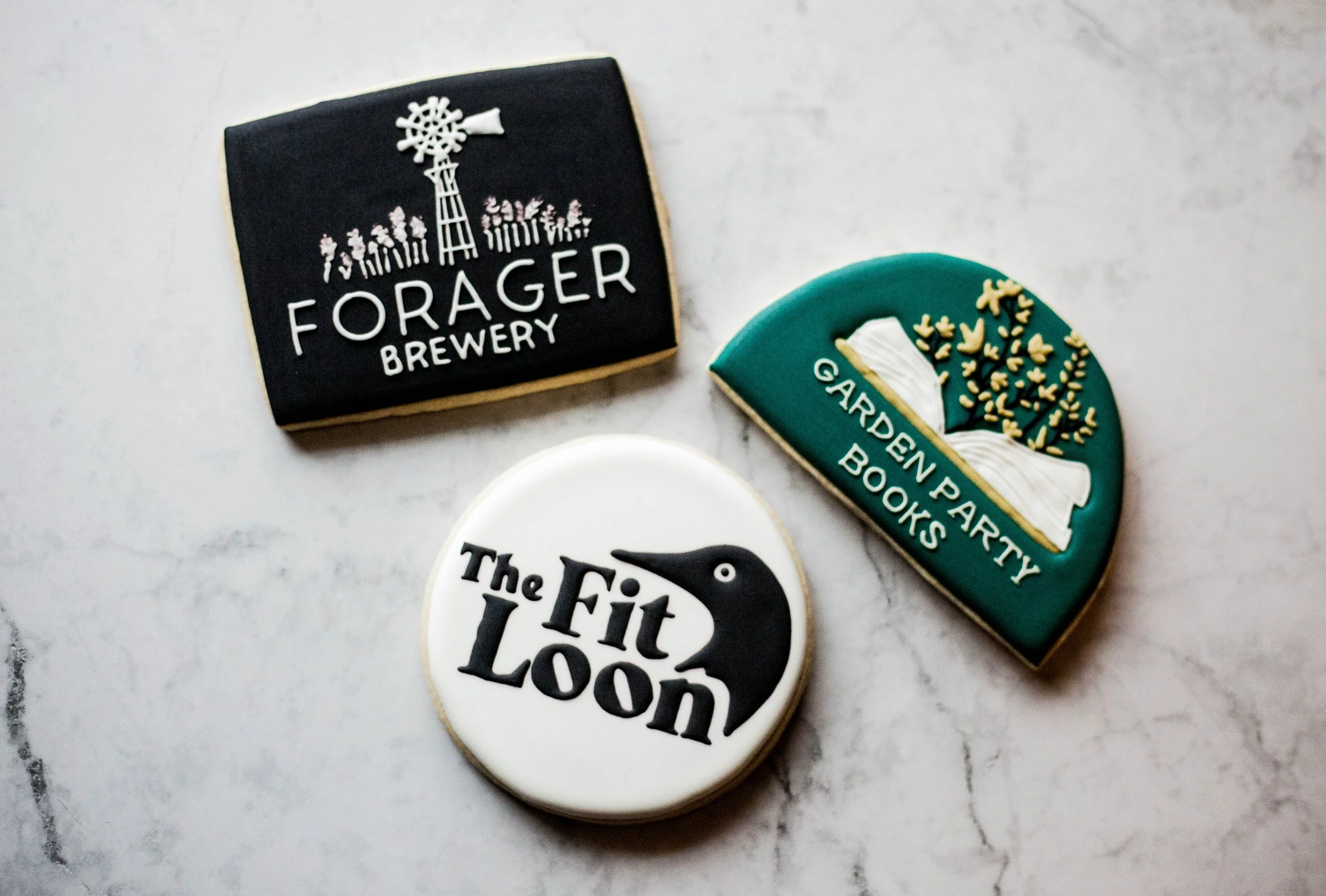
Photo by Corrie Strommen
Thank you so much for taking the time to read Kat’s story! If you find value in this content, please consider donating to help Collider continue amplifying the voices of Rochester entrepreneurs. You can also learn more about Pretty Good Cookies by clicking the link below!
Article by Corrie Strommen, Director of Community at Collider.
Words from Amarama Vercnocke: Local Artist, Educator, and Entrepreneur
Collider is passionate about sharing the stories of Rochester entrepreneurs and small business owners! Amarama Vercnocke is a local artist, educator, and entrepreneur who was kind enough to sit down with us and share about their journey, thoughts on the bridge between art and entrepreneurship, their experience as a non-binary artist, and how we can best support our community of artists here in Rochester!
Thank you so much for watching! For more information on Amarama’s art and work in the community, click the link below! If you find value in this content, please consider supporting Collider and our storytelling efforts by donating.
High End Bridal and Attending to the Details with Claire Landgraf
Collider is passionate about sharing the stories of Rochester entrepreneurs and small business owners! We recently had the pleasure of meeting with Claire Landgraf, owner of Finery Bridal Chic, a high end bridal shop, who was willing to share her story with us.

Photo by Twelve Ten Photography
Many of us are all too familiar with that stress inducing, all important wedding planning event- the selection of the dress. A bride entering Finery Bridal Chic will walk through their Broadway store doors and be greeted immediately by smiling faces and dazzling light glistening off of jewels and sequins, shining through lace and chiffon, and illuminating rows upon rows of immaculate gowns, any of which could be the one. Tailed by carefully selected friends and family, they are ushered onto sets of plush, velvet couches and into the guiding, helpful hands of Claire Landgraf and her team.

Photo by Twelve Ten Photography
Claire entered the bridal industry in her hometown in Tennessee at an early age, seeking a job in high school. For her, it was love at first sight.
“I went into a shop looking for a prom dress and while I was looking my mom started chatting with the owner, who mentioned that she was looking for some part time help. I had never had a job before and thought it sounded like a lot of fun. I started right then during prom season and eventually she let me work up to selling bridal. It was like I was bitten by a bug. It was immediately so fun, artistic, and satisfying. Just like that, as a junior in high school, I knew that this was what I wanted to do and eventually branch off to have my own store.”
Years passed and Claire stuck to that resolute high school dream. In college she pursued dual degrees in business and english, all the while continuing to grow in the industry. She started off selling, moved up to management, became a shop-in-shop representative for a designer, and then worked as a dress buyer.
“I’ve been in the wedding industry for about fifteen years now and it's really where my heart is. We joke that it’s like joining the mob or the mafia, because once you get into it, you never really get out. It gets into your blood. There’s something very rewarding about working with brides and in such a happy space. There are so many opportunities in this industry to make a bride feel great, to have a positive impact on their body image, and help them plan aesthetically what they’re trying to create on their big day.”
In 2011, Claire moved to Rochester. Creatively burnt out from years in retail and only intending to be in Rochester for five years, Claire made a change and worked briefly in marketing. But when she began falling for Rochester and met her husband, she began thinking more seriously about her longtime dream of opening her own store.
“In a lot of ways Rochester reminded me of the town I grew up in, in terms of size, having an employment pillar like Mayo Clinic, and providing a great community for businesses to thrive and also for raising a family.”
Though she knew the ins and outs of the industry, opening her own business had its challenges.
“Finding a space was more challenging than I expected it to be. I knew it needed to be at least somewhat visible, either with drive by or foot traffic, which is why I chose downtown for my first location. Downtown rent was expensive and it took me a while to figure out a location. Dialing in designers that I wanted to carry was also a challenge. Which isn’t specific to me and my store, it's just something you have to tackle when you’re getting into the bridal business. I wanted to make sure that I wasn’t just picking up designers that were available, but also filled the design, service, and customization gaps that I was looking for.”
Now located at 1104 North Broadway, Claire has created a beautiful, welcoming space full of incredible gowns. But the space and the product aren’t the key to a successful high-end retail business, Claire points out, but the experience and service that you’re providing to each and every bride is.
“Over the course of my time working in bridal I worked both ends of the spectrum, from selling to brides on a $1,000 budget, all the way to brides buying $20,000 gowns. There’s a really vast difference in the level of service that a bride gets at a certain price threshold. It never made sense to me why a bride spending less money wouldn’t get the same high end experience as a bride spending more, but unfortunately it just isn’t usually the case.”
At Finery Bridal, Claire takes the extra time, energy, and money to attend to the details, whether that be a gift box with earrings and champagne or taking the time to walk brides through sizing and customizations. She enjoys the opportunity to tailor a unique and enjoyable experience to each and every bride.
“We have an awesome opportunity to be problem solvers here. Some brides come in unsure of how this works, had a poor experience elsewhere, or are having a difficult time finding something. We can be very versatile here with customizations and cater a lot of things to specific brides. Hokey as it sounds, we really can make a dream a reality. Brides often have an image of how they want to look on their big day. And whether that fits into a neat little box or six boxes, we can help them achieve that image.”

Photo by Twelve Ten Photography
She continued, “It takes time to teach your employees how to provide excellent service. It also takes time to figure out what little things brides appreciate during their experience. This oftentimes is the most expensive clothing item that anyone is ever going to purchase, and typically only once. People want to get it right, so there’s a lot of stress tied up in finding their gown. Of course I can’t always provide the perfect dress, not everyone is going to find it here. But what I can provide is a two hour experience for any bride who walks in, where they have a safe space where they can be heard and supported.”
Claire has found challenges in the industry as she pursues owning a shop that is inclusive towards brides of all sizes.
“I find myself having the same conversations with brides now as I did when I was first starting out. Most clothing in our culture has shifted to vanity sizing and more inclusivity toward all bodies. The bridal industry unfortunately has not done so and is still operating off of European size charts which can put a bride in a gown that is anywhere from one to three number sizes larger than they would typically wear if they picked it off the rack at a store. That can be a difficult mental hurdle to get past. We can say all day long that a number doesn’t matter, but at the end of the day there’s so much noise coming at us as women about what the confines of traditional beauty constructs are supposed to be. While we may have done fantastic amounts of work or therapy to balance out that barrage of noise, often it’s still there to some extent.”
She continued, “While there’s still a huge void in the market for size inclusivity, I’ve started seeing more offerings for curvy brides. I’m super happy that we offer two different lines here that are curvy specific, that are geared toward showing off curves, hugging curves, and fitting curves properly, instead of putting a tent over a body which is what dresses for larger bodies used to be. There are strides that are being made in the industry, slowly, very painfully slowly.”
“The conversation we have with every bride is the same, ‘You’re going to see a number today that you typically haven’t seen. I don’t want you to worry about it, because what we’re worried about today is giving you the right fit, whatever that means, the number doesn’t matter. We just need to make sure that when you walk down the aisle you’re comfortable, supported, and that you feel good about yourself.’ We’ve taken that angle here, because the industry has not quite caught up. I think as shop owners we have to decide if we’re going to make this a part of the conversation. And if yes, decide how we are going to do so in such a way that is really positive and let people know that regardless of size, shape, color, gender, or religious affiliation that this is a safe, welcome space and that we can make this experience work for anyone.” she concluded.
With one little girl and another on the way, Claire is busy with motherhood as well as business. She jokes that many of her hobbies include coloring, doing puzzles, and going to gymnastics practice. Pre-Covid and in less busy times, she and her husband enjoy live music, travel, and biking. They also love eating out at Bleu Duck, Cameo, and the Redwood Room.
Claire is very grateful to find joy in her work, “I wish I had more fun hobbies to mention, but I really love doing what I do so much. It gives me such a perfect outlet for my creative needs. It’s really really fulfilling for me and I love it.”
Thank you so much for taking the time to read Claire’s story! If you find value in this content, please consider donating to help Collider continue amplifying the voices of Rochester entrepreneurs. You can also learn more about Finery Bridal Chic by clicking the link below!
Finery Bridal Chic
Article by Corrie Strommen, Director of Community at Collider.
"I'll Just Do My Own Thing." Coffee, World Travel, and Rochester City Ordinances with Abe Sauer
Collider is passionate about sharing the stories of Rochester entrepreneurs and small business owners! We recently had the pleasure of meeting with Abe Sauer, owner and founder of Old Abe Coffee Company, writer, and a Rochester entrepreneur since 2014, who shared his story, personal experience with opening a successful food business, and insights on the Rochester entrepreneurial landscape.

Photo by Corrie Strommen
Many of us are used to the sight of coffee shop owner and meatless bahn mi connoisseur, Abe Sauer, peddling away on his bike, pulling his coffee cart downtown or to the farmer’s market. Or seeing him behind the counter of his brick and mortar, a charming little home turned mural covered coffee house and restaurant. While a coffee cart may be a bizarre and rare sight here, Abe, who lived for many years in China and New York, found it odd that Rochester, with its bustling downtown full of Mayo Clinic employees on the hunt for coffee and food, lacked any kind of vendor presence when he moved here with his wife and two children in 2014.
Abe was born and raised in Wisconsin on a dairy farm. He went to college at the University of Wisconsin Madison and early on knew that he and college were not a good fit. He joined a study abroad program in China and when the program ended and the rest of the class flew home, Abe chose to abandon his college pursuits and stay in China…for the next seven years.
“At that time, in the early 90s, China was in a period of opening and growing economically. I was young, nineteen or twenty, and just thought ‘why not?’ There was an embassy attached to the school I had been going to and they hired me since I spoke the language, was living locally, and knew the layout of the city really well. At that time, it was like the Wild West, which is cliche to say, but they would just give me work without asking for any qualifications, no one asked to see a degree. They would ask if I could do a job, I would say yes, and if I could follow through I could keep the job. So I would do all kinds of things for them. I also did networking and events as a personal side business.”
He continued, “I was living with friends in the cheapest possible cement apartment, so even though the level of failure was high, I could still make it in the city. It was a great place to be creative entrepreneurially with very low consequences.”

Photo provided by Abe Sauer, from his time in China.
After his time in China, Abe moved to New York and lived there for the next eight years. He initially worked as a secretary, using his meager salary to rent a tiny, “roach infested Queen’s apartment” and “live off of day old bagels.” During that time he decided to finish his liberal arts degree, enrolled in night school, and passionately pursued writing. He started writing for some magazines and after completing his degree, landed a couple of marketing positions, one of which led him to move to Minneapolis.
In Minneapolis, Abe met his wife, they married, had two children, and decided to head back to China. “She had never been there, I still had contacts and opportunities there, and we just decided to go for it. The kids went to school there and it was a crazy and fun couple of years.”
Upon returning to the states, his wife accepted a job at Mayo Clinic and he applied there as well. Despite years of marketing experience, he was not hired, he suspects because he did not have an MBA. Undeterred, Abe shrugged and thought “I guess I’ll just do my own thing.”
He continued writing and consulting. Some of you may be familiar with the Minnesota classic children’s book, Goodnight Loon. A little known fact is that Abe wrote back in 2012! Along with children’s literature, Abe wrote for publications such as Esquire, The Atlantic, Reuters and The St. Paul Almanac.
During this time, while walking around downtown in search of coffee and discovering lines out the door of a skyway Starbucks, Abe saw the clear lack of coffee shops to fuel the patient and Mayo Clinic employee population of downtown Rochester. Inspired by the vendors that were a constant part of his life both in China and New York and a personal love of good coffee, Abe decided to jump through some city ordinance hoops and avoid the high rental costs of downtown spaces to open a mobile coffee cart.
“I looked up the ordinances, and had to play with an allowance they had intended for flower and newspaper vendors. Food wasn’t allowed, so there was another hoop to jump through. But, you know, I’m pretty good at reading directions, so I figured out a way to make it work.”
“At first I was just giving coffee away.” Abe admitted, chuckling. “You could tell that all of these people staring at me, of course, would love a free cup of coffee, but in a very Minnesotan way, couldn’t get over the embarrassment of walking up to a guy in a bike pulled coffee cart and asking for free coffee. Which was such a change from my experiences in New York, where if someone was giving away something it would be gone in minutes. It was very interesting learning the habits of the consumers of Rochester, which are very different from what I was used to in New York or even Minneapolis. Rochester has a very unique consumer environment. It has so much money, but it spends it in ways that are not easy to predict.”
Something clicked in the community in 2014 and 2015. “You saw this explosion of more localized, unique ideas and a strong demand for that. Which has continued up to now.”
With time, Abe’s coffee cart would become a popular downtown staple. Shortly after opening it, Abe had made the switch to a mostly vegetarian and vegan diet and was doing a lot of cooking for himself. He observed that there were very few plant based food options in Rochester and decided to try selling some food on the cart as well. Sure enough, people liked it! As demand grew, and winter made outdoor vending an unpleasant prospect, Abe looked toward finding a permanent space for his business, The small house that would become Old Abe’s Coffee Company was found near Cooke Park, where he has since established a beloved local restaurant and hangout spot for the vegetarian and vegan foodies of Rochester (or anyone who likes dang yummy food and coffee).

Old Abe has recently adapted to adopt another local favorite, Drift Dough Doughnuts. “It was just a good fit. The owner’s heart was in his other business in Decorah and he was kind of a satellite owner and wanted to move on. I wanted to have more food options for morning business and they had already figured out some vegan, gluten free, and dairy free doughnut recipes. So we took on their baker. It’s been a good transition; we’ve been able to get really creative with doughnut flavors since they lend themselves so well to so many different iterations.”

Photo by Corrie Strommen
This isn’t the only recent development, however, as Abe has also purchased a neighboring space and hopes to expand to provide overflow seating there, and- good news for dog lovers- build out a dog run between the two spaces! Fingers crossed all goes as planned!
A Rochester entrepreneur for many years now, Abe has some good insights about the entrepreneurial ecosystem of Rochester.
“If there’s one big problem I would point out, it would be that Rochester, as a city, has a tendency to invest in the one, big, expensive idea that is the ‘game changer’ in their minds, instead of investing in a ton of fast and dirty small ideas. I think that the latter are what people actually want. There’s very little risk to the city in investing in a bunch of fifty-thousand dollar ideas around town. There’s a ton of risk in investing in one twenty million dollar idea, and if that idea doesn’t work, there’s the inevitable feeling that you need to keep throwing money at it to keep it going instead of being really honest and admitting that it just didn’t work. So you’re throwing money at a dying idea, and money you invest in something that’s dying is money not being invested in something that is growing.”
“I joke about Rochester being like a treasury bill, it isn’t going to boom overnight, but it is the most secure investment you can make, because it just grows at this slow, reliable pace, like a municipal bond. The city is very consistent from a financial perspective, which is good, in many ways for our local economy. It does, however, tend to make people extremely risk averse, in my experience. Most people don’t move to Rochester because they are risk takers, people come here for the safety and reliability of the jobs they can find here. People want predictability and safety. Rochester has those things. I think that the risk averse nature, or more traditional nature of the city, in a bad way, sinks into the way the city governs itself. The city has many restrictive ordinances, which are harmful to entrepreneurs. If you come along and do something that Rochester has never seen before, it can be extremely hard to get people to see your vision.”
He continued, “On the other hand, many of the entrepreneurs who I know in the city have a support network either through their spouse or family that is grounded in one of the core businesses in Rochester. Mayo Clinic is the obvious one. A lot of people start these businesses with one person working a very reliable job and supporting them, giving them the entrepreneurial freedom to go start another venture. In this way, a safety net exists while you’re taking chances up front. Rochester’s economy allows for that. Because my wife worked at Mayo Clinic when I was first getting started, I didn’t have to bring home a paycheck. It may not have worked out if that option wasn’t available to me. At times when I was getting started, I was working eight hours a day and making forty-five dollars. I think it’s much more difficult for people without a financial support network to go out and take chances entrepreneurially.”
“In that sense it’s a great community to start a business in, because it has that safety net for entrepreneurs. But at the same time they face these extreme headwinds from ordinances. Which is a culture born out of that economic safety. When you have a bunch of medical professionals and IBM engineers in a town together, you aren’t going to get a risk taking town.” he concluded, laughing.
He advises aspiring Rochester entrepreneurs, in partial jest and seriousness, “Get a spouse with a stable job or live at home with your parents.” His core advice is to have a good perspective and attitude toward what you can live without and, though it may be uncomfortable for a time, adjust your life to pursue your idea. Tough it out.
While Abe admits that he doesn’t have a lot of free time, one of his favorite pastimes is swimming with his children. “Perversely, I also love reading city ordinances, agenda packets and things like that. Mostly because you start to see trends and patterns in them that predict the future of Rochester’s growth in a way, which I find super interesting. It’s also a hobby that I can do at home, not on my feet.”
Thank you so much for taking the time to read Abe’s story! If you find value in this content, please consider donating to help Collider continue amplifying the voices of Rochester entrepreneurs. You can also learn more about Old Abe Coffee Company by clicking the link below!
Article by Corrie Strommen, Director of Community at Collider.
Immersive Storytelling and Experience Based Entrepreneurship with Laura Elwood
Collider is passionate about sharing the stories of Rochester entrepreneurs and small business owners! We recently had the pleasure of meeting with Laura Elwood, owner of Chamberlain Concierge and Lifestyle Management and Rochester Trolley and Tour Company, who was willing to share her journey as a transportation industry entrepreneur.

Photo by Corrie Strommen
Laura Elwood, owner of Rochester Trolley and Tour Company, never really envisioned running a transportation business, even though it would seem natural given her upbringing. Raised in Rochester, she grew up in the transportation industry. Her father and grandfather started R&S Transport, a medical non-emergency transportation service in the 90s.
“I grew up in this world of hospitality, logistics, and transportation. When I graduated from high school I wasn’t sure what I wanted to do. I was always jealous of people who just knew that they were going to be a lawyer or a doctor, or were good with numbers or born with a basketball in their hands. That just wasn’t who I was. But I had all of these experiences that my parents and grandparents had given me. I was never scared of meeting new people or exploring new places. My family ingrained in me that every person you meet has a story to tell.”
Artistic by nature, Laura went to Columbia College in Chicago to pursue an art degree after completing high school.
“When I look back on it, I would do it all over again in a heartbeat. Columbia was great at fostering creativity, deep critical thinking, and the application of your skills. They allowed students to be individualized. I graduated with an interdisciplinary art degree. Which, in a way, was the beginning of my entrepreneurial journey.”
When she graduated in 2009, however, she still didn’t have a clear idea of what career path she wanted to pursue. So she bounced around working odd jobs in Chicago. For a time she worked for the Chicago Cubs, babysitting players’ children during games. She also worked for Second City, a comedy club and improvisation school. “I realized I was obsessed with experiences, so I would seek out all of these weird experience jobs.”
When the economy crashed, Laura found herself jobless and driftless so when a friend who had a holiday visa to New Zealand asked if she wanted to come along, Laura threw caution to the wind and started what ended up being a year long backpacking adventure.
“My friend was there for six months and I ended up staying for a year. I was totally a free spirit, but it was also terrifying to do it alone, and to live in a country where you don’t know anyone. But it helped me realize that the experience of exploring the world was something that I always wanted in my life.”
After her escapade, Laura dejectedly made her way back to Rochester. “Once you see the world and return to your hometown it can feel like a setback. I was uncertain of my place in this community and didn’t know how I could contribute to Rochester.”
At the time, Laura’s father was still working in the transportation industry, so she followed him into the business, taking on marketing, operations, management assistance, training and HR, learning the ins and outs of the family business.
“I learned from all kinds of people doing different jobs in the industry. I cut my teeth. I really loved being part of a huge team.”
Laura continued traveling often while managing a black car business. While lounging on a beach one day, she received an email, the contents sparked an idea and made her wonder if she would be better off running her own business. When she returned home she decided to move forward and opened her very own transportation company, Chamberlain Concierge & Lifestyle Management.
While she didn’t always have entrepreneurial aspirations, Laura does think some aspects of her personality lend themselves well to it. “I’m very independent, individualistic, adaptable and optimistic. I always knew something would work out, I could get a lot of different jobs. But I’m also someone who needs a lot of space to work and do my thing. So I knew that I needed to work for someone who could give me the space and independence I need, or build something of my own.”
What started as a black car service quickly expanded and grew. Laura decided to pursue a shuttle service for her company in December of 2019. She placed an order for custom shuttles…which never arrived.
“I went from Plan A to Plan K in four days, because my shuttle service was supposed to start in January. I was looking around town to see if I could partner with another local company until my own buses arrived.”
This led Laura to have her first conversation with the owner of Rochester Trolley and Tour Company at the time. While he couldn’t help with her lack of buses, they did have several conversations about transportation.
In time, Laura got her shuttle service up and running. She and the owner of the trolley company continued talking casually and he started asking questions about where Laura saw her business going. Eventually the conversation rolled around to what it would look like for Laura to purchase the business from him.
Fast forward to September of 2020, after Laura’s company had managed to stay afloat for the first waves of the pandemic. The subject of purchasing the trolley company was once again broached and Laura agreed.

Photo by Corrie Strommen
“I purchased the trolley company, and sixty days later we were shut down. It stayed that way for the next six months. We’re still recovering from that. In hindsight I ask myself why I did it. But I’m a risk taker. The potential for reward seemed worth the risk. ”
Though purchasing an already established business may help you bypass many start-up obstacles, it is certainly not without challenges of its own.
“When you buy somebody’s business you inherit their habits, success, and clients. You also inherit any problems they may or may not have disclosed to you, or things that maybe weren’t a problem for them, but are for you; it depends on your perspective.”
She continued, “It’s challenging. I grew up in the industry so I didn’t have to learn how to run the business per se, but I had to learn how each vehicle operates. There were also things that were totally different from what I’d done up to that point. I’m great at picking people up and getting them from Point A to Point B and all the details in between, but building a tour is a completely different experience.”
One of Laura’s favorite experiences that she and her team offers is the history tour. She is very passionate about immersive storytelling and loves that tour building gives her and her team the opportunity to be creative and share the story of Rochester that visitors may not know.
To Laura, having a strong team is one of the most important factors in her business and she was grateful that she was able to build a great one over the course of the pandemic.
“The team that I have is phenomenal. Finding people that actually care about the experience, who care about the customer, and aren’t just here to collect a paycheck is so vital. They have a passion for the little things and understand that they’re all connected to the success of the business. On the darkest days, I’ve been so grateful to have these people around me because I absolutely could not do it without them.”

Photo by Corrie Strommen
Laura is thankful for the continued support of the community. “I was really fortunate that the majority of the clients and partners of the trolley didn’t jump ship when it changed hands. They were excited that I was a part of it, which in and of itself was a generous opportunity.”
As a word of advice to anyone considering starting or taking over a business, Laura urges them to do their homework, to not be afraid of asking for help and advice, to take risks, and to view failure as a learning opportunity. “Don’t forget to take care of yourself. Eat, sleep, take time away, and turn your phone off. If you don’t care for yourself, you’ll fall apart.”
Outside of work, Laura unwinds by making her own art, listening to podcasts, and being active. Still an avid traveler, she looks forward to days ahead when she can safely travel to her heart’s content. Some of her favorite spots in town are Fiddlehead Coffee, Ootori Sushi, Bleu Duck Kitchen, and local breweries. She loves spending time with friends who keep her grounded and remind her that she doesn’t need to work ALL the time.
“I’m just really lucky that I have people who believe in me.”
From Marine Engineering to Consignment with Paige Jehnke
Collider is passionate about sharing the stories of Rochester entrepreneurs and small business owners! We recently had the pleasure of meeting with Paige Jehnke, owner and founder of Janky Gear, a local gear shop that sells top brand outdoor clothing and equipment on consignment, who was willing to tell us her story and share some insight on what it’s like opening a small business in Rochester.

Photo by Corrie Strommen
Paige’s journey with Janky Gear, though it wouldn’t open for another 13 years, started when she graduated from Mayo High School in 2008. After graduating, she spent the summer working at a camp in Northern Minnesota, with plans to attend college in the fall in pursuit of an art history degree. But amidst her days spent taking kids outdoors, hiking, backpacking and sailing, she couldn’t shake the doubts she had about pursuing that path. During a “freak out” she decided to change course, and zip codes, in a big kind of way! For the next year, Paige worked in Alaska with at-risk youth through AmeriCorps before instead pursuing further education at the University of Alaska, majoring in Outdoor Recreation.
After her time in Alaska, Paige headed to Colorado where she worked a variety of jobs, from being a ski attendant to working on trail crews, all in her favorite field- literally anything outdoors. She had found her desired lifestyle, but she wanted it to be more sustainable. Driven by a desire for stability and health insurance, Paige returned to school, this time to become a marine engineer with the end goal of working on ships.
During her time in Alaska, she was a deckhand on a few boats and met people who worked three months on, three months off as marine engineers- not a bad gig -and hey, it provided health insurance! She acquired her degree and a US Coast Guard license to operate ships with both steam and diesel engines, of unlimited horsepower and tonnage, and off she sailed into the sunset- or rather the Great Lakes. Later on, she moved west to work on tugboats and eventually, and most recently, worked as a contracted civilian engineer on a military transport vessel stationed in Okinawa, Japan.
In the following years, Paige would most often be far away from home. And when she did occasionally return to the States, amidst training, traveling and visiting friends, she did not often make her way back to Rochester.
Cue that all too present and life changing event, the Covid-19 pandemic.
When it hit, Paige was stuck overseas and confined to a ship with little to no clear communication from leadership about a timeline for getting home (or where exactly their groceries were coming from). Paige used this time of strain and uncertainty to consider what to do next, and started writing a business plan. Once Paige was finally able to leave her ship mid-pandemic she could’ve gone anywhere. She found, however, that after all her work across the country and the world, that she was craving somewhere familiar and headed homeward to Rochester.
Paige’s inspiration for Janky Gear started during her time spent out west, where she always had an outdoor store to go to for clothing and gear. At the center of her business plan are three points: get outside, be active, and try new things. Looking at the people of Rochester, from millennial girls to retirees, Paige saw people that love the area they’re in, and who enjoy being outdoors- or at least like wearing The North Face jackets and leggings. Rochester was the spot, and now she just needed to get started.
The summer before opening Janky Gear, Paige joined us here at Collider for our Basics of Entrepreneurship Class. She was surprised by the structure and time commitment of the class, finding it to be more college class adjacent than expected.
“I appreciated the blend of formal class format, learning from already established business owners, and then also having classes dedicated to us and our own businesses, doing the homework within our own experience and sharing what we found and learned. There was a wide range of people and business plans in the class which opened doors for future collaboration and community building,” she explained.
“Obviously I didn’t connect with every business owner or idea, but there were definitely instances that helped me learn a lot. I was also able to hone in on my target market which was really useful. I thought it was great that Amanda and Jamie were there for every class and had really helpful insights for each topic. I find often now as I’m planning and thinking of ways to improve my business and get people through the door, that a lot of my ideas and thought process reach back to the class and the skills I learned there. I would honestly love to sign up again, it was extremely minimal in cost and I learned so much. As things in the business world constantly evolve, it would be good to make sure that I’m still spot on in my knowledge of how to best run my business.”
When the time came to prepare for the grand opening of Janky Gear- projected for July 2021- the process was not without challenges. The build out process in particular- meeting with contractors, getting bids, wrestling with labor shortages, and setting a realistic timeline- all proved to be more difficult than anticipated. Having worked on shipyards and managed projects, Paige at times wondered as she jumped in mid demolition project, “Shouldn't a contractor be doing this?” But she put in some elbow grease, tested her patience, and eventually the store was able to open in mid September.

Photo by Corrie Strommen
She mentioned “I’d like to reassure other prospective business starters that buildout will likely take longer than you think and it will be frustrating, but eventually it’ll come together and that’s alright.”
Another challenge, and a more perpetual one, is stocking the store with merchandise and keeping up with seasons.
“Since my business model is consignment, all of the product in the store comes directly from people in the community bringing it in. I constantly have to figure out ways to both get customers through the door and also get consignors to bring things in, which is always a worry for me.”
So far so good, however, as Paige has been happy to see how the space has taken off and filled up rather quickly.
Her advice to other aspiring business owners? Write out a thorough business plan and be open to change.
During her self designated ‘weekends' on Mondays and Tuesdays when the store is closed, Paige does her best to not work and enjoy her time off. She loves being outdoors, as I’m sure you’ve gathered, and spends time outside skiing (downhill and cross country), hiking, and biking. She enjoys hanging out at Forager and, an introvert at heart, curling up at home with a book.
Paige is grateful for the community support of Janky Gear and says, “I’m not making a lot of money, but you know what, I’m happy and that’s okay.”

Photo by Corrie Strommen